
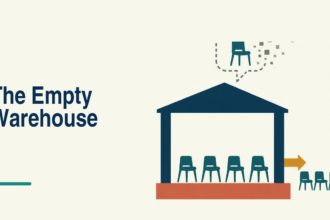

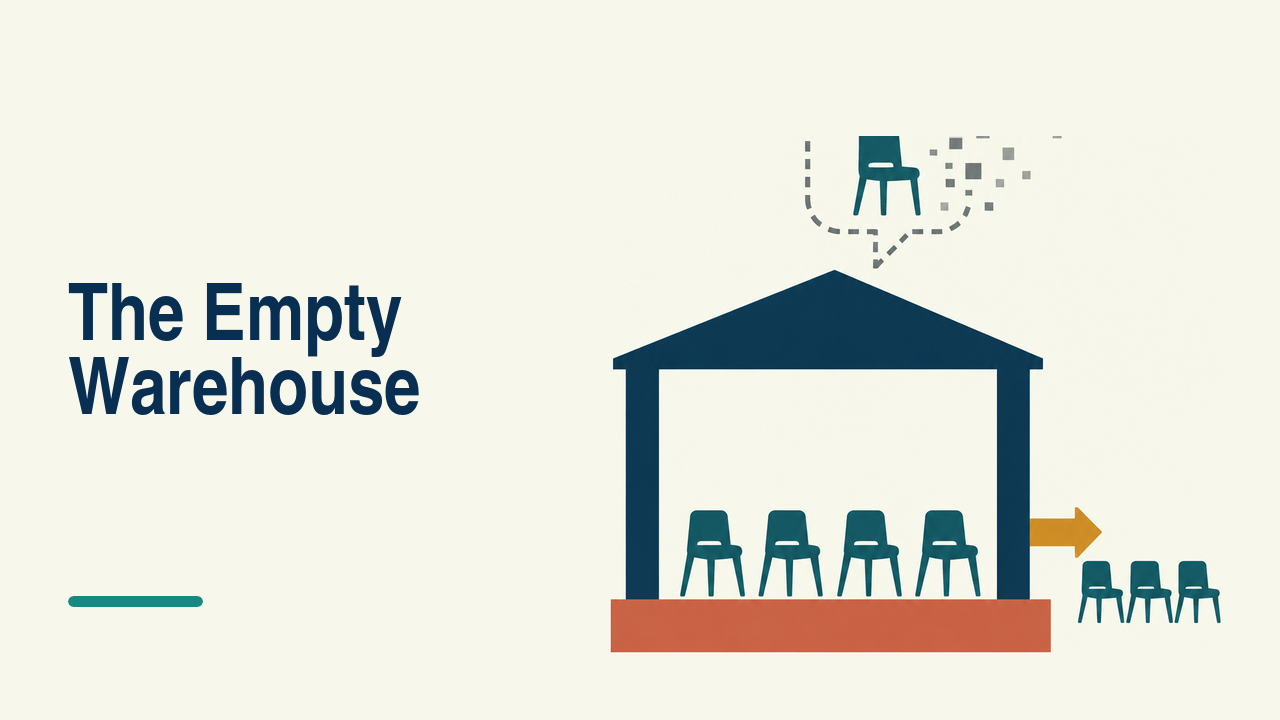
The warehouse was full when the orders stopped.
Sana Qureshi walked between pallets of ergonomic desk chairs ordered during the last months of remote-work fever. A corporate buyer’s promised rollout had doubled her forecast. The promise was verbal; the inventory was not.
When offices reopened, the buyer reduced its order by eighty percent. Freight and storage bills came due; her lender demanded more collateral.
Her sales director proposed discounting the chairs below cost. “Cash is oxygen,” he said.
Her father, who had invested his retirement savings, wanted her to wait. “Good chairs don’t spoil.”
But interest did. Every month turned wood, fabric, and steel into more debt.
Sana accepted an offer from a liquidation chain that would cover the loan but not supplier balances.
Before signing, Sana received an inquiry from a school district seeking classroom seating. The chairs were too large and expensive, but a modification could make them suitable. Developing it would require new money and time she did not have.
She signed the liquidation deal.
The company paid the bank, settled suppliers at sixty cents on the dollar, and closed. Her father lost most of his investment. For months, Sana avoided discount stores.
Then she saw one of her blue chairs in a neighborhood tax office. The clerk praised it and said it had cost less than a plastic model.
“Do you make them?” he asked.
“I used to.”
He wanted to know why she stopped. Sana could have blamed the buyer, the market, or timing. Instead she said, “I believed a conversation was an order.”
The clerk nodded and returned to his screen. The chair held him perfectly. Failure had not made the product bad; it had only made ownership of it impossible.