


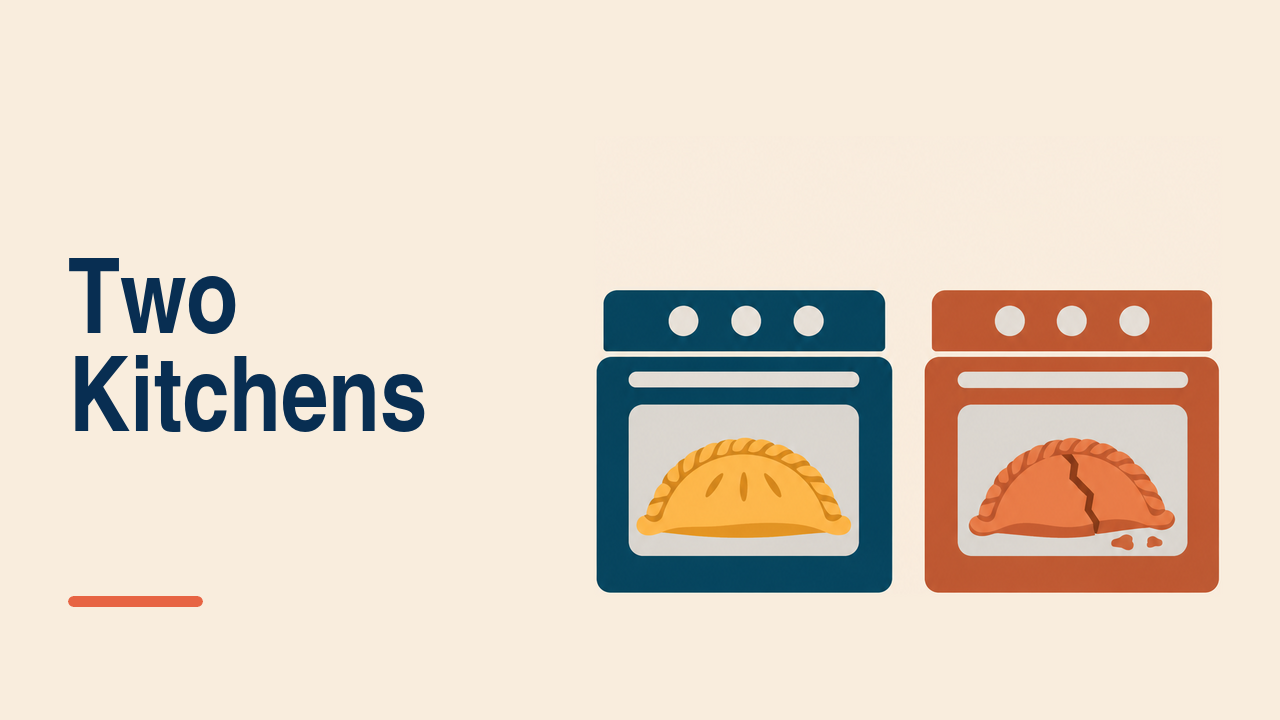
The second kitchen made Rosa Vega’s empanadas faster and worse.
To reach Austin, Rosa rented a shared commercial kitchen and trained a new crew from laminated recipe cards. On opening day, customers complained that the dough cracked and the beef tasted sweet.
“They followed the measurements,” said Eli, her son and operations manager.
Rosa tasted the filling. The onions were a different variety; the ovens ran hotter; the dough rested beside an industrial fan. None of those facts appeared on a card.
Eli wanted sensors, revised procedures, and tighter supplier contracts. Rosa wanted to drive to Austin every morning. Her husband reminded her that they had opened the second kitchen so she could stop working fourteen-hour days.
An investor offered money for three more locations if Rosa standardized the menu around the easiest fillings.
“People buy the name,” Eli said. “We can protect the name only if the business works without you.”
Rosa closed Austin for four days. She brought both crews together and made them cook without recipe cards, explaining what the dough should feel like and how the onions should smell before the spices went in. Then she accepted that some judgment could not be scaled cheaply.
She declined the investor and reopened Austin with five fillings instead of nine. The mushroom stayed. Catering orders were capped. Prices rose by a dollar.
The second kitchen became profitable, but expansion stopped there. Eli left to manage a hotel restaurant, tired of building systems his mother would always revise by taste.
On his last day, Rosa asked whether she had held him back.
“The company, maybe,” he said. “Not me.”
She heard both kindness and accusation. The next batch came out evenly browned, almost like the first kitchen’s, but not quite.