


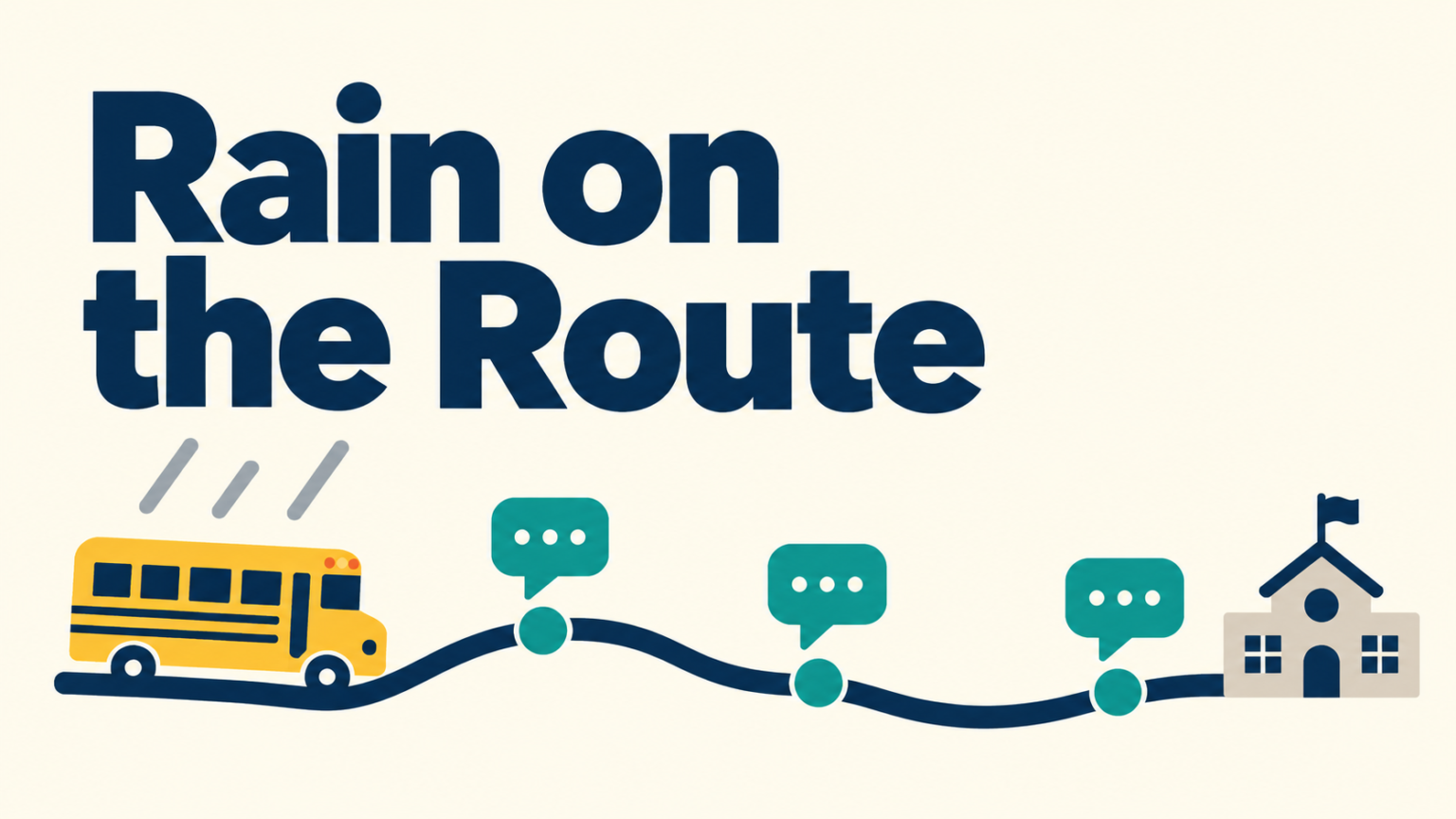
The school bus stopped under a sheet of Nairobi rain, and every parent in Amina Wekesa’s phone group asked the same question: Where are the children?
The driver, Mr. Oduor, answered none of them. He was steering around a flooded underpass with thirty-two students shouting behind him. Amina watched messages turn from concern to accusation. One father threatened to report the school.
That night, Amina sketched a service that would send location updates through ordinary text messages. Parents without smartphones could use it. Drivers would tap one large button at departure, delay, and arrival. Her brother Kamau, a software developer between contracts, built a prototype.
The first head teacher loved it until Amina named the price.
“Parents already blame us for fees,” she said. “Make it free and sell their data, like everyone else.”
Amina pictured advertisements built from children’s routes. “No.”
They tried charging parents directly. Forty-three signed up; nineteen paid after the free month. Meanwhile, schools wanted custom dashboards, printed reports, and someone to answer calls at dawn. Kamau began missing interviews because he was repairing cheap tracking devices.
“We invented another job for ourselves,” he said.
Amina considered closing. Instead, she removed live maps and offered three verified messages per trip, triggered by the driver and confirmed through the school office. It was less impressive and much cheaper. Two schools agreed to pay from their transport budgets because the system reduced complaint calls.
During the next storm, Amina received only one parent message: Thank you, bus delayed but safe.
Kamau read it over her shoulder. “So the big idea is three texts?”
“The big idea was panic,” she said. “Three texts are what people will buy.”
They still had no salary that month, but they had a product small enough to survive.