
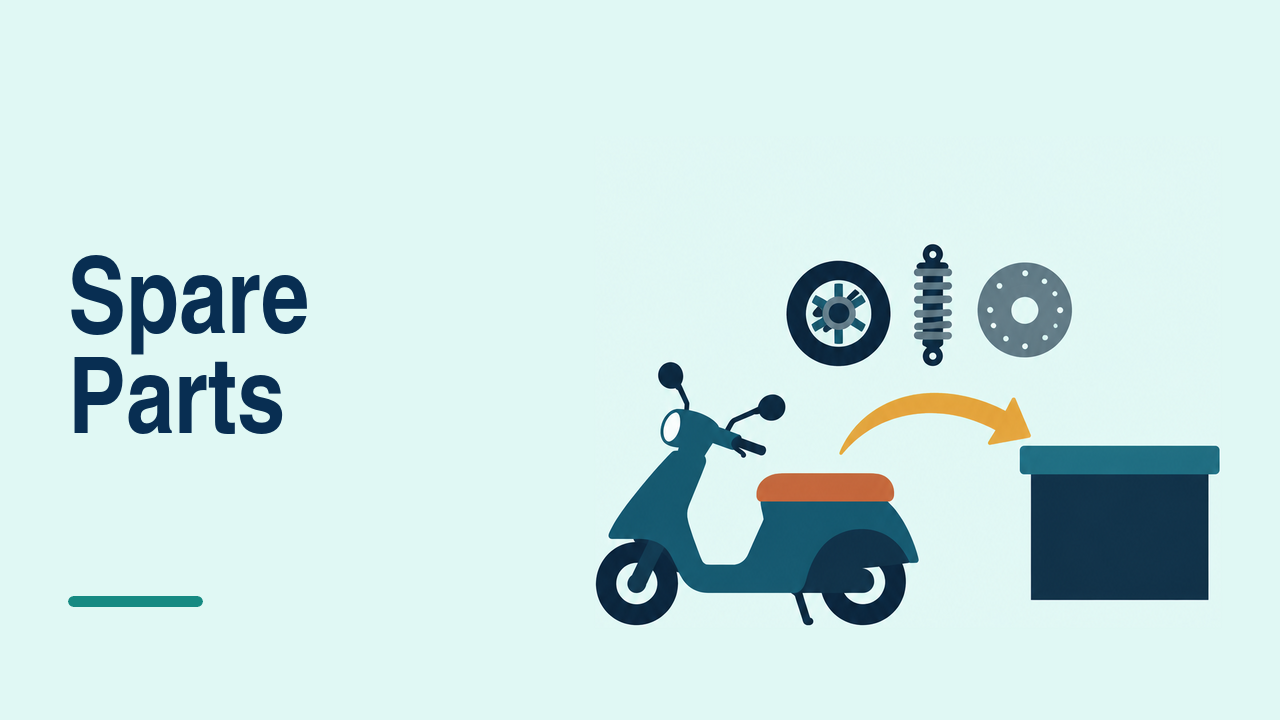
When the scooter company failed, Ibrahim Saleh still had nine hundred brake cables.
The warehouse held parts for vehicles no one would finance. His app-based scooter rental service had expanded too fast, lost vehicles to theft, and collapsed after the city restricted parking.
The liquidator valued the parts as scrap. Ibrahim’s former mechanic, Dalia, objected. “Every repair shop in the city waits weeks for these.”
During their final month, they listed parts and called independent mechanics. Orders arrived through voice notes: three tires in Giza, a controller in Nasr City, two chargers across the river.
Ibrahim wanted to build a marketplace immediately. Dalia wanted shelves, labels, and a delivery motorcycle that started reliably.
“Apps are why we have nine hundred cables,” she reminded him.
They bought the inventory from the liquidator with borrowed money and opened a parts counter. At first, former investors treated the new business as a salvage operation, not a startup. They were correct. Margins came from knowing which imported controller fit which unofficial scooter model.
Demand grew. Ibrahim proposed exclusive supplier contracts; Dalia refused unless they also stocked generic parts that small shops could afford. Their argument ended with her threatening to leave.
They compromised on transparent quality grades and warranties. Returns increased, but so did trust.
Three years later, the counter supplied 140 repair shops and employed seven former scooter couriers. It never regained the valuation of the rental company. It produced cash.
One morning, a young founder arrived seeking parts for a fleet of shared scooters. He described an expansion plan across four districts.
Ibrahim began to warn him. Dalia interrupted and asked how many brake cables he needed.
“Two hundred to start.”
She glanced at the stock, now down to seventeen.
“Pay before delivery,” she said.