
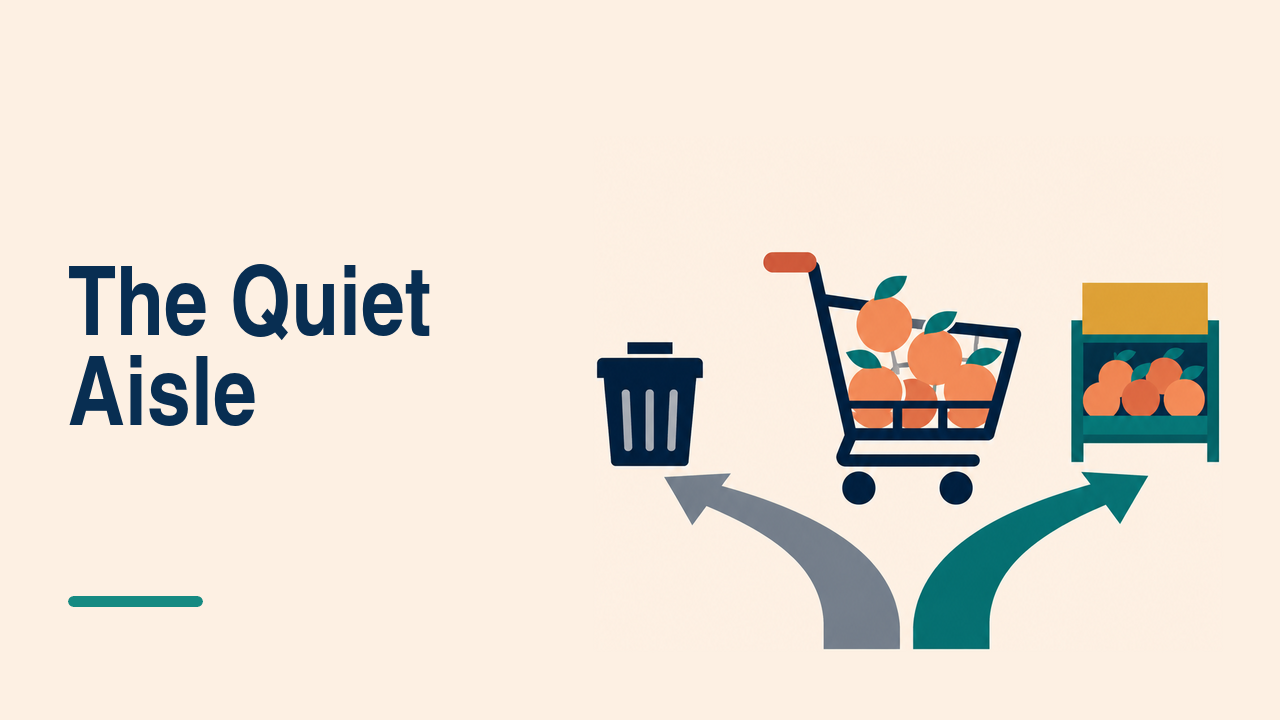
At 9:47 every night, Leila Santos wheeled bruised peaches behind the Cleveland grocery store and emptied them into a green dumpster. On Thursdays, the bakery joined her with unsold bread. The waste report called both losses “shrink.” Her manager called them unavoidable.
“Then stop ordering like tomorrow is a holiday,” Leila said one evening.
Marcus looked at the loading dock camera. “You want my badge or yours suspended?”
Leila had spent six months building a simple forecasting tool after her shifts. It read weather, neighborhood events, and recent sales, then suggested smaller orders before slow days. Her test used numbers she copied from printed department reports. When a regional director saw waste fall during Marcus’s unofficial trial, he asked for a presentation.
Two days before it, corporate counsel emailed a nondisclosure form assigning the company ownership of anything created with store information. Leila’s rent had risen ninety dollars. Her mother needed dental work. The company offered a five-thousand-dollar bonus and a promotion to assistant manager.
Her friend Jonah urged her to refuse. “They’ll roll it into eight hundred stores and forget your name.”
“Names don’t pay root canals,” Leila said.
At the meeting, she disclosed exactly how she had built the prototype. She also declined the assignment clause and offered a six-month paid pilot using anonymized data. The director ended the meeting in twelve minutes.
Corporate removed the tool the next morning. Marcus apologized without looking at her.
Three months later, two independent grocers subscribed to Leila’s rebuilt version. Together they paid less than her promised raise. On Thursday night, she still closed the quiet aisle, but the peaches in her cart were headed to a discount shelf marked TODAY, not the dumpster. She photographed it for no one.